Friday, July 31, 2015

Why Are You So Afraid?

On that day, when evening had come, he said to them, "Let us go across to the other side." And leaving the crowd, they took him with them in the boat, just as he was. And other boats were with him. And a great windstorm arose, and the waves were breaking into the boat, so that the boat was already filling. But he was in the stern, asleep on the cushion. And they woke him and said to him, "Teacher, do you not care that we are perishing?" And he awoke and rebuked the wind and said to the sea, "Peace! Be still!" And the wind ceased, and there was a great calm. He said to them, "Why are you so afraid? Have you still no faith?"
Mark 4:35-40
He rebuked them for being in that state of agitation and terror and alarm while He was with them in the boat. That is the first great lesson we have to apply to ourselves and to one another. It is very wrong for a Christian ever to be in such a condition. I do not care what the circumstances may be, the Christian should never be beside himself like this, the Christian should never be at his wit's end, the Christian should never be in a condition in which he has lost control of himself. That is the first lesson, a lesson we have emphasized before because it is an essential part of the New Testament teaching. A Christian should never, like the worldly person, be depressed, agitated, alarmed, frantic, not knowing what to do. It is the typical reaction to trouble of those who are not
Christian, that is why it is so wrong to be like that. The Christian is different from other people, the Christian has something which the non-Christian does not possess, and the ideal for the Christian is that which is stated so perfectly by the Apostle Paul in the fourth chapter of the Epistle to the Philippians: 'I have learned, in whatsoever state I am, therewith to be content ... I can do all things through Christ which strengtheneth me'. That is the Christian position, that is what the Christian is meant to be like. The Christian is never meant to be carried away by his feelings, whatever they are--never. That is always wrong in a Christian. He is always to be controlled, as I hope to show you. The trouble with these men was that they were lacking in self-control. That is why they were miserable, that is why they were unhappy, that is why they were alarmed and agitated, though the Son of God was with them in the boat. I cannot emphasize this point too strongly. I lay it down as a simple proposition that a Christian should never lose self-control, should never be in a state of agitation or terror or alarm, whatever the circumstances. That is obviously our first lesson. The position of these people was alarming. They were in jeopardy and it looked as if they were going to be drowned the next moment, but our Lord says in effect: 'You should not be in that condition. As My followers you have no right to be in such a state even though you are in jeopardy'.
--Martyn Lloyd Jones, Spiritual Depression: Its Causes and Cure, p.137-138
He is not afraid of bad news; his heart is firm, trusting in the LORD.
Psalm 112:7

Saturday, July 18, 2015

To Believe This

Grace to you and peace from ... the Lord Jesus Christ, who gave himself for our sins...
Galatians 1:3-4
The genius of Christianity takes the words of Paul "who gave himself for our sins" as true and efficacious. We are not to look upon our sins as insignificant trifles. On the other hand, we are not to regard them as so terrible that we must despair. Learn to believe that Christ was given, not for picayune [petty] and imaginary transgressions, but for mountainous sins; not for one or two, but for all; not for sins that can be discarded, but for sins that are stubbornly ingrained.

Practice this knowledge and fortify yourself against despair, particularly in the last hour, when the memory of past sins assails the conscience. Say with confidence: "Christ, the Son of God, was given not for the righteous, but for sinners. If I had no sin I should not need Christ. No, Satan, you cannot delude me into thinking I am holy. The truth is, I am all sin. My sins are not imaginary transgressions, but sins against the first table, unbelief, doubt, despair, contempt, hatred, ignorance of God, ingratitude towards Him, misuse of His name, neglect of His Word, etc.; and sins against the second table, dishonor of parents, disobedience of government, coveting another's possessions, etc. Granted that I have not committed murder, adultery, theft, and similar sins in deed, nevertheless I have committed them in the heart, and therefore I am a transgressor of all the commandments of God.

"Because my transgressions are multiplied and my own efforts at self-justification rather a hindrance than a furtherance, therefore Christ the Son of God gave Himself into death for my sins."

To believe this is to have eternal life.

--Martin Luther, Commentary on the Epistle to the Galatians, p. 9
Indeed, to believe this is to have eternal life.

Sunday, July 12, 2015

Marks of the Evangelical

Martyn Lloyd-Jones on some of the distinguishing marks of an evangelical:

  • The evangelical is one who is entirely subservient to the Bible.  He is a man of one book; he starts with it; he submits himself to it; this is his authority.
  • The evangelical uses this term as a prefix and not as a suffix.  What I mean by that is that the first thing about the man is that he is evangelical.  The particular denomination to which he belongs is secondary; it is not primary.  In other words, there is all the difference in the world between talking about an evangelical Baptist and a Baptist evangelical.  I am contending that the man is evangelical first.
  • He is a man who is always watching.  They are to be discriminating; they are always to be examining; they are always to be watchful.  And so when a man ceases to be watchful, he, to that extent, ceases to be an evangelical.  The person who says, It is all right; you need not bother; we are all Christians and having a marvellous time together -- and is not watchful, is already departing from the biblical position.
  • The evangelical distrusts reason and particularly reason in the form of philosophy.  Philosophy has always been the cause of the church going astray, for philosophy means, ultimately, a trusting to human reason and human understanding.  The evangelical starts from the Scriptures.  He also reads the history of the church, and there he finds that the history proves what has been emphasized in the Scripture, that when men trust to reason and understanding they go astray.  The evangelical distrusts scholarship and is watchful of it.  That does not mean he is anti-intellectual; it does not mean that he becomes obscurantist; but it does mean that he keeps reason and scholarship in their place.  They are servants and not masters.
  • The evangelical takes a particular view with regard to the sacraments.  He recognizes only two, of course, like other Protestants, but his view of these often differentiates him, and generally does differentiate him, from those who are not evangelical.
  • The evangelical takes a critical view of history and tradition.  The evangelical believes in the principle of discontinuity.  Looking at the history of the church, he sees how the church, which was a live, spiritual body, always tended to become hardened and fossilized into a dead institution.  He realizes that this is the greatest danger, so, far from being afraid of the principle of discontinuity, he knows that he can only understand the true history of the living church in terms of discontinuity, the breaks that have taken place before the Reformation, and particularly at the Reformation, and since the Reformation.  The evangelical is not tied by the decisions of the early councils of the church.  He does not slavishly fall down before them.  He examines them, he examines everything in light of the Scriptures, even the great pronouncements of the councils and everything else.
  • The evangelical is a man who is always ready to act on his beliefs.  He studies the Scriptures; he discovers the doctrine and he can judge that it is true and can see that the people with whom he is connected do not believe it.  He says, I cannot go on like this, I am compromising my doctrine; I have got to act on the truth.
  • The evangelical is a man who always simplifies everything.  The gospel not only simplifies belief and the statement of beliefs; it always simplifies our view of church order and church government.  The evangelical does not believe in vestments, putting on copes and mitres and changing vestments for different parts of the service.  He does not believe in ceremonies and liturgies and processions.  The church buildings of the evangelical are always simple, whereas the those of the Catholics tend to be ornate and elaborate.
  • The evangelical is always concerned about the doctrine of the church.  He is concerned about a pure church.  His idea of the church is that it consists of the gathered saints.  He does not believe in a state church.  He is vitally concerned about his correct view of the nature of the Christian church.
  • The evangelical puts tremendous emphasis upon the rebirth.  You will find that as men cease to be evangelical, they put less and less emphasis upon regeneration, and they tend to put more and more upon the activity of the human will and the decision of the individual person.  But the evangelical sees everything in terms of regeneration, the action of God.  He says, I am what I am by the grace of God; and he is amazed at himself.
  • Prayer is vital in the life of the evangelical; it is his life.  You will find that evangelicals almost invariably have formed religious societies for reading the Bible, discussing it together, for prayer, and for sharing one another's experiences.
  • Evangelicals pay great attention to the way in which people live.  They are strict in their behaviour.  The evangelical is careful about his life, careful to maintain good works, to live a life above reproach, not to be a hindrance or an obstacle to a weaker brother.  The great ethic, the emphasis on holiness of the New Testament, is something which true evangelicals have always set great store by.
  • The evangelical by nature is tremendously interested in revival.  He is always longing for an outpouring of the Spirit, and the great evangelical reawakenings have always been a result of an effusion of the Holy Spirit.
  • The evangelical always gives primacy to preaching.  The church starts with preaching.  Revivals, reformations, have always been great restorations of preaching.  To the evangelical, nothing compares with preaching.
  • The evangelical is a man who is always concerned about evangelism.  The evangelical is a man who, because of what God has done for him, is anxious that others should have the same.  Not only that, he sees something of the glory and the majesty and the sovereignty of God; he believes in hell, eternal punishment; and he is concerned about those men dying in spiritual darkness round and about him.  They become a burden to him, and he is not satisfied until he has done his utmost to bring them to the knowledge of the truth as it is in Christ Jesus.
--Martyn Lloyd Jones, Knowing the Times, chapter 16

Saturday, July 11, 2015

God Wrote a Book

And beginning with Moses and all the Prophets, he interpreted to them in all the Scriptures the things concerning himself.
Luke 24:27
For God, who said, “Let light shine out of darkness,” has shone in our hearts to give the light of the knowledge of the glory of God in the face of Jesus Christ.
2 Corinthians 4:6

Wednesday, June 24, 2015

What Does the Narrow Gate Have to Do with the False Prophet?

For the gate is narrow and the way is hard that leads to life, and those who find it are few. Beware of false prophets, who come to you in sheep's clothing but inwardly are ravenous wolves. You will recognize them by their fruits. Are grapes gathered from thornbushes, or figs from thistles? So, every healthy tree bears good fruit, but the diseased tree bears bad fruit. A healthy tree cannot bear bad fruit, nor can a diseased tree bear good fruit. Every tree that does not bear good fruit is cut down and thrown into the fire. Thus you will recognize them by their fruits.
Matthew 7:14-20
The picture we need to have in our minds, therefore, should rather be this. The false prophet is a man who comes to us, and who at first has the appearance of being everything that could be desired. He is nice and pleasing and pleasant; he appears to be thoroughly Christian, and seems to say the right things. His teaching in general is quite all right and he uses many terms that should be used and employed by a true Christian teacher. He talks about God, he talks about Jesus Christ, he talks about the cross, he emphasizes the love of God, he seems to be saying everything that a Christian should say. He is obviously in sheep's clothing, and his way of living seems to correspond. So you do not suspect that there is anything wrong at all; there is nothing that at once attracts your attention or arouses your suspicion, nothing glaringly wrong. What then can
be wrong, or may be wrong, with such a person? My suggestion is that finally this person may be wrong both in his teaching and in his type of life for, as we shall see, these two things are always indissolubly linked together. Our Lord puts it by saying, 'Ye shall know them by their fruits.' The teaching and the life can never be separated, and where there is wrong teaching in any shape or form it always leads to a wrong type of life in some respect.

How then can we describe these people? What is wrong with their teaching? The most convenient way of answering this is to say that there is no 'strait gate' in it, there is no 'narrow way' in it. As far as it goes it is all right, but it does not include this. It is a teaching, the falseness of which is to be detected by what it does not say rather than by what it does say. And it is just at this point that we realize the subtlety of this situation. As we have already seen, any Christian can detect the man who says outrageously wrong things; but is it unfair or uncharitable to say that the vast majority of Christians do not seem to be able to detect the man who seems to say the right things but leaves out vital things? We have somehow got hold of the idea that error is only that which is outrageously wrong; and we do not seem to understand that the most dangerous person of all is the one who does not emphasize the right things.

That is the only way to rightly understand this picture of the false prophets. The false prophet is a man who has no 'strait gate' or 'narrow way' in his gospel. He has nothing which is offensive to the natural man; he pleases all. He is in 'sheep's clothing', so attractive, so pleasant, so nice to look at. He has such a nice and comfortable and comforting message.

...we must go back to the Old Testament and read what it says about the false prophets, because the type does not change. They were always there, and every time a true prophet like Jeremiah or someone else came along, the false prophets were always there to question him, and to resist him, and to denounce and ridicule him. But what were they like? This is how they are described: 'They have healed the hurt of the daughter of my people slightly (or lightly), saying, Peace, peace; when there is no peace.' The false prophet is always a very comforting preacher. As you listen to him he always gives you the impression that there is not very much wrong. He admits, of course, that there is a little; he is not fool enough to say that there is nothing wrong. But he says that all is well and will be well. 'Peace, peace', he says. 'Don't listen to a man like Jeremiah,' he cries; 'he is narrow-minded, he is a heresy hunter, he is non-co-operative. Don't listen to him, it is all right.' 'Peace, peace.' Healing 'the hurt of the daughter of my people slightly, saying Peace, peace; when there is no peace.' And, as the Old Testament adds devastatingly and with such terrifying truth about religious people then and now, 'my people like to have it so.' Because it never disturbs and never makes you feel uncomfortable. You carry on as you are, you are all right, you do not have to worry about the strait gate and the narrow way, or this particular doctrine or that. 'Peace, peace.' Very comforting, very reassuring always is the false prophet in sheep's clothing; always harmless and nice, always, invariably, attractive.

...

They offer an easy salvation, an easy type of life always.  They discourage self-examination; indeed, they almost feel that to examine oneself is heresy.  They tell you not to examine your own soul.  You must always 'look to Jesus', and never at yourself, that you may discover your sin.  They discourage what the Bible encourages us to do, to 'examine' ourselves, to 'prove our own selves', and to face this last section of the Sermon on the Mount.  They dislike the process of self-examination and mortification of sin as taught by the Puritans, and those great leaders of the eighteenth century--not only Whitefield and wesley and Jonathan Edwards, but also the saintly John Fletcher, who put twelve questions to himself every night as he retired to bed.  It does not believe in that, for that is uncomfortable.  It is an easy salvation and easy Christian living.  It knows nothing about Paul's feeling, when he says 'we that are in this tabernacle do groan, being burdened.'  It does not know anything about fighting 'the good fight of faith.'  It does not know what Paul means when he says that 'we wrestle not against flesh and blood, but against principalities, against powers, against the rulers of the darkness of this world, against spiritual wickedness in high places' (Eph. 6:12).  It does not understand that.  It does not see any need for the whole armour of God, because it has not seen the problem.  It is all so easy.

--Martyn Lloyd Jones, Studies in the Sermon on the Mount, p. 500-501, 505

Monday, June 15, 2015

Love: Not What We Thought It Was

We usually recoil from the cost of love, thinking it is an alien substance, but it is the essence of love.  This is strangely encouraging because when the pressure of love builds, we think that somehow we showed up for the wrong life.  This isn't what we signed up for.  But no, this is the divine path called love.

--Paul Miller, A Loving Life: In a World of Broken Relationships, chapter 7
Strangely encouraging, indeed.

Wednesday, February 11, 2015

Suffering from 350 Years of Dominance and Prosperity

For people who speak thus make it clear that they are seeking a homeland.
Hebrews 11:14

Saturday, January 24, 2015

The Subtlety of Modernity

Evangelicals are antimodern only across a narrow front; I write from a position that is antimodern across the entire front.  It is only where assumptions in culture directly and obviously contradict articles of faith that most evangelicals become aroused and rise up to battle "secular humanism"; aside from these specific matters, they tend to view culture as neutral and harmless.  More than that, they often view culture as a partner amenable to being coopted in the cause of celebrating Christian truth.  I cannot share that naivete; indeed, I consider it dangerous.  Culture is laden with values, many of which work to rearrange the substance of faith, even when they are mediated to us through the benefits that the modern world also bestows upon us.  Technology is a case in point.  While it has greatly enhanced many of our capabilities and spread its largess across the entirety of our life, it also brings with it an almost inevitable naturalism and an ethic that equates what is efficient with what is good.  Technology per se does not assault the gospel, but a
technological society will find the gospel irrelevant.  What can be said of technology can also be said of many other facets of culture that are similarly laden with values.  It is the failure to see this and to see how, in consequence, evangelical faith is being transformed that is now greatly straining its connections to historic Protestant orthodoxy.  It is precisely because I reject belief in the modern world that I am able to believe in the truth that this orthodoxy seeks to preserve.  It is because many evangelicals believe in the innocence of modern culture and for that reason exploit it and are exploited by it that they are unable to believe in all of the truth that once characterized this Protestant orthodoxy.  In the current typology, evangelicals are typically moderns in their orientation; this book is insistently antimodern.

--David Wells, No Place for Truth: or Whatever Happened to Evangelical Theology, p. 11
This book was written in 1993.  But, over 20 years later, it reads as though it were written today.

Friday, January 09, 2015

God So Loved the Elect?

For God so loved the world, that he gave his only Son, that whoever believes in him should not perish but have eternal life.
John 3:16

[John Owen] conceives a hyponymous relation between world and elect here (i.e. world includes 'elect' as a subset).  This is not possible in John where the elect are defined against the world -- they are those given to Jesus by the Father "out of the world" [17:6], that is, 'elect' is a concept in John which is in opposition to 'world', defined over against it.  Owen's substitution would lead 3:16 to read "God so loved those He chose out of the world", which alters the sense of the verse significantly, in effect denying what the verse affirms, a love of the world.  World is a description of a qualitative state of rebellion against God, which does not have reference to anyone's relation to the decree of God, the latter being manifested in John by coming to Jesus, listening to His voice, believing in Him.  But when an individual does that he is, as stated above, no longer "of the world".  To make the 'world' the 'elect', even to view it as a mixture of elect and reprobate [i.e. in terms either of eternity or potentiality], is to commit a category confusion in Johannine theology, and one not without effects, not least being the complete loss of connotative meaning.  As [D.A.] Carson notes, to say that God loves only the elect and hates the rest, which is the motivation for making 'world' here equal 'elect', "would destroy the evangelistic thrust and the emotive incentive to belief based on God's love for the 'world', a love which sent the Son of God on His saving mission and robs the 'world' of excuse."

--Neil Chambers, A Critical Examination Of John Owen's Argument For Limited Atonement In "The Death of Death In The Death of Christ.", p.152-153

Sunday, January 04, 2015

Why There Must Be Duality within Humanity

Then the LORD God said, “It is not good that the man should be alone; I will make him a helper fit for him.” 
Genesis 2:18
The reason why the solitary existence of the man is not good is not because it forces the man to endure isolation and loneliness nor because he must face the challenges of life without human assistance--sentimental readings like these find little basis in the text--but because he has been endowed with the divine image and hence with the capacity to empty himself sacrificially into another.  Such an endowment cannot be enjoyed unless there is at least one other person.  For there to be an exchange of self-giving love, there must be duality within humanity.  As a lone human, Adam cannot manifest the divine image.

--Tim Savage, No Ordinary Marriage: Together for God's Glory, p.34-35 (emphasis added)
Biblical theology at its finest.

Friday, January 02, 2015

Only the Christian Knows This

The most experienced psychologist or observer of human nature knows infinitely less of the human heart than the simplest Christian who lives beneath the Cross of Jesus. The greatest psychological insight, ability and experience cannot grasp this one thing: what sin is. Worldly wisdom knows what distress and weakness and failure are, but it does not know the godlessness of man. And so it does not know that man is destroyed only by his
sin and can be healed only by forgiveness. Only the Christian knows this. In the presence of a psychiatrist I can only be a sick man; in the presence of a Christian brother I can dare to be a sinner. The psychiatrist must first search my heart and yet he never plumbs its ultimate depth. The Christian brother knows when I come to him: here is a sinner like myself, a godless man who wants to confess and yearns for God’s forgiveness. The psychiatrist views me as if there were no God. The brother views me as I am before the judging and merciful God in the Cross of Jesus Christ.

--Dietrich Bonhoeffer, as quoted by David Powlison in The Pastor as Counselor

Thursday, December 25, 2014

How Could Micah Be So Confident?

I will bear the indignation of the LORD
because I have sinned against him,
until he pleads my cause
and executes judgment for me.
He will bring me out to the light;
I shall look upon his vindication.
Micah 7:9 
Micah (speaking for Jerusalem as a collective whole, see Micah 6:9) ends verse 9 with complete confidence that the consequences for his sin are only temporary. He is totally convinced that a day is coming when he will no longer sit in darkness and feel God’s anger toward him for his sin. But rather he will stand in the light and see the righteousness of God.

But how can Micah be so confident?
The soul who sins shall die. The son shall not suffer for the iniquity of the father, nor the father suffer for the iniquity of the son. The righteousness of the righteous shall be upon himself, and the wickedness of the wicked shall be upon himself. 
Ezekiel 18:20
This verse is absolutely clear that the consequence of sin is death. By his own admission at the beginning of verse 9, Micah (speaking as Jerusalem personified) has sinned against God. So we would expect for him to die based on this verse.

But Micah doesn’t talk like a man on death row who knows that justice means the end of his life. Instead, he talks like an innocent man who knows that justice means he’s going to be set free. 

How is that possible?

How is it possible that, on the one hand, God has promised that the soul who sins against Him shall die? And then, on the other hand, that He will bring salvation to His people who have sinned against Him?

To hope is to wait on God to fulfill His promises. But how is it possible for God to fulfill both of these promises (Ezekiel 18:20, Micah 7:7)?

How can Micah truly have hope in God?  How can anyone have hope in God?

The answer is Christmas.
There is therefore now no condemnation [guilt] for those who are in Christ Jesus. For the law of the Spirit of life has set you free in Christ Jesus from the law of sin and death. For God has done what the law, weakened by the flesh, could not do. By sending his own Son in the likeness of sinful flesh [incarnation] and for sin, he condemned sin in the flesh [death on the cross].
Romans 8:1-3
God fulfills His promise that the soul who sins against Him shall die by sending Jesus to be born and live as a human and then condemning Him by putting Him to death on the cross for our sins. And He fulfills His promise to save His people by giving eternal life, joy, and peace to everyone who trusts Jesus as Lord.

Micah knew this promise well.  He knew that God was one day going to send a Savior who would be the fulfillment of all of God's promises.
But you, O Bethlehem Ephrathah,
who are too little to be among the clans of Judah,
from you shall come forth for me
one who is to be ruler in Israel,
whose coming forth is from of old,
from ancient days.
Therefore he shall give them up until the time
when she who is in labor has given birth;
then the rest of his brothers shall return
to the people of Israel.
And he shall stand and shepherd his flock in the strength of the LORD,
in the majesty of the name of the LORD his God.
And they shall dwell secure, for now he shall be great
to the ends of the earth.
And he shall be their peace.
Micah 5:2-5
God is an immortal spirit who can’t die (1 Timothy 1:17). But 2,000 years ago God was born as a human baby named Jesus in a little town called Bethlehem so that He would be able to die for our sins and give us eternal peace and security if we trust Him as Lord.

Because Jesus (the innocent) was counted guilty we (the guilty) can be truly counted innocent.  Micah probably didn't know that God was going to send the Messiah to die, but he knew that somehow the Messiah would be the fulfillment of all God's promises.  That's why he was so confident.

Knowing much more than Micah knew, should we not be much more confident?
For our sake he made him to be sin who knew no sin, so that in him we might become the righteousness of God. 
2 Corinthians 5:21 

...until he pleads my cause
and executes judgment for me.
He will bring me out to the light;
I shall look upon his vindication [righteousness].
Micah 7:9

Sunday, December 14, 2014

We Cannot Be Robbed of God's Providence

Whether for correction or for his land 
or for love, he causes it to happen. 
Job 37:13

Is it not from the mouth of the Most High
that good and bad come?
Lamentations 3:38
I form light and create darkness,
I make well-being and create calamity,
I am the Lord, who does all these.
Isaiah 45:7
"We cannot be robbed of God's providence." This was one of the sayings current in the household of Thomas Carlyle, apparently much on the lips of that brilliant woman, Jane Welsh Carlyle. In it, the plummet is let down to the bottom of the Christian's confidence and hope. It is because we cannot be robbed of God's providence that we know, amid whatever encircling gloom, that all things shall work together for good to those that love him. It is because we cannot be robbed of God's providence that we know that nothing can separate us from the love of Christ---not tribulation, nor anguish, nor persecution, nor famine, nor nakedness, nor peril, nor sword...
Were not God's providence over all, could trouble come without his sending, were Christians the possible prey of this or the other fiendish enemy, when perchance God was musing, or gone aside, or on a journey, or sleeping, what certainty of hope could be ours? "Does God send trouble?" Surely, surely. He and he only. To the sinner in punishment, to his children in chastisement. To suggest that it does not always come from his hands is to take away all our comfort...
The world may be black to us; there may no longer be hope in man; anguish and trouble may be our daily portion; but there is this light that shines through all the darkness: "We cannot be robbed of God's providence." So long as the soul keeps firm hold of this great truth it will be able to breast all storms.  A firm faith in the universal providence of God is the solution of all earthly troubles.

--B. B. Warfield, 'God's Providence Over All,' in Selected Shorter Writings of B. B. Warfield (2 vols; ed. J. E. Meeter; P&R, 2001), 1:110; quoted in Paul Helseth, 'Right Reason' and the Princeton Mind: An Unorthodox Proposal (P&R, 2010)
This is from a man whose wife was struck by lightning and permanently paralyzed on their honeymoon.  When he talks about not being robbed of God's providence, it wasn't detached theory for him. It was the only consolation for his soul.

Friday, November 28, 2014

Hesed Love

Hesed love is a determination to do someone good, no matter what, to be faithful to a covenant regardless of its impact on you.  It wills to love when every fiber in your body screams run.  This determination to love is at the heart of Jesus's relationship with his Father, and at the heart of ours as well.  Not surprisingly, Jesus says: "If anyone would come after me, let him deny himself and take up his cross and follow me" (Mark 8:34). 
Paul the apostle says that this death of self united him with Jesus's death: "For we who are alive are always being given over to death for Jesus' sake, so that the life of Jesus also may be manifested in our mortal flesh.  So death is at work in us, but life in you" (2 Cor. 4:11-12).  That is the essence of Calvary love.
--Paul Miller, A Loving Life: In a World of Broken Relationships, chapter 3

Monday, October 27, 2014

Kingdom Greatness

When John's messengers had gone, Jesus began to speak to the crowds concerning John: “What did you go out into the wilderness to see? A reed shaken by the wind? What then did you go out to see? A man dressed in soft clothing? Behold, those who are dressed in splendid clothing and live in luxury are in kings' courts. What then did you go out to see? A prophet? Yes, I tell you, and more than a prophet. This is he of whom it is written,  “‘Behold, I send my messenger before your face, who will prepare your way before you.’ I tell you, among those born of women none is greater than John. Yet the one who is least in the kingdom of God is greater than he.” 
Luke 7:24-28
After telling us that John the Baptist is the greatest human being to have ever lived, Jesus ends with this mysterious sentence: “Yet the one who is least in the kingdom of God is greater than he.” What in the world does that mean?

There was another man who wasn’t a reed shaken by the wind. Throughout His ministry, He drew large crowds but many walked away from Him because He preached a kingdom that was not of this world (John 6:66).

There was another man who wasn’t found in kings’ courts. He was born in a dirty stable (Luke 2:7) and He tells us that throughout His ministry He didn’t have anywhere to lay His head (Luke 9:58).

There was another man who was obedient to the point of death. But this man died on a cross, which was the most shameful death.
Though he was in the form of God, He did not count equality with God a thing to be grasped, but emptied himself, by taking the form of a servant, being born in the likeness of men. And being found in human form, he humbled himself by becoming obedient to the point of death, even death on a cross. 
Philippians 2:6-8
John the Baptist, a mere man, was happy to be a nobody (John 3:27-30).

“Yet the one who is least in the kingdom of God is greater than he.”

Jesus, who is God Almighty, emptied himself and became nothing.

There is one who went lower than John. By going to the cross for your sins and for mine, Jesus was rejected not just by men but also by God. John was rejected by men but not by God. Jesus became the least because He was rejected by men and by God.  That’s what makes Him greater than John.
Therefore God has highly exalted him and bestowed on him the name that is above every name.
Philippians 2:9

Tuesday, September 23, 2014

And Will You Murmur?

I am mute; I do not open my mouth, 
for it is you who have done it.  
Psalm 39:9 
Has not God given you…
- a changed heart,
- a renewed nature, and
- a sanctified soul
—and will you murmur?

Has He not given you…
- Himself to satisfy you,
- His Son to save you,
- His Spirit to lead you,
- His grace to adorn you,
- His covenant to assure you,
- His mercy to pardon you,
- His righteousness to clothe you
—and will you murmur?

Has He not made you…
- a friend,
- a son,
- a brother,
- a bride,
- an heir
—and will you murmur?

Has not God often turned…
- your water into wine,
- your brass into silver, and
- your silver into gold
—and will you murmur?

When you were dead, did not He quicken you?
When you were lost, did not He seek you?
When you were wounded, did not He heal you?
When you were falling, did not He support you?
When you were down, did not He raise you?
When you were staggering, did not He establish you?
When you were erring, did not He correct you
When you were tempted, did not He support you? and
When you went in dangers, did not He deliver you?
—and will you murmur?

--Thomas Brooks, The Mute Christian under the Smarting Rod

Friday, September 19, 2014

What Fire Is to Gold, Affliction Is unto Souls

Three times I pleaded with the Lord about this, that it should leave me. But he said to me, “My grace is sufficient for you, for my power is made perfect in weakness.” Therefore I will boast all the more gladly of my weaknesses, so that the power of Christ may rest upon me. For the sake of Christ, then, I am content with weaknesses, insults, hardships, persecutions, and calamities. For when I am weak, then I am strong. 
2 Corinthians 12:8-10
Where affliction is, there is also consolation; where consolation, there is grace also. For instance when he was thrown into the prison, then it was he wrought those marvellous things; when he was shipwrecked and cast away upon that barbarous country, then more than ever was he glorified. When he went bound into the judgment-hall, then he overcame even the judge. And so it was too in the Old Testament; by their trials the righteous flourished. So it was with the three children, so with Daniel, with Moses, and Joseph; thence did they all shine and were counted worthy of great crowns. For then
the soul also is purified, when it is afflicted for God’s sake: it then enjoys greater assistance as needing more help and worthy of more grace. And truly, before the reward which is proposed to it by God, it reaps a rich harvest of good things by becoming philosophic [calm or unflinching in the face of trouble, defeat, or loss]. For affliction rends pride away and prunes out all listlessness and exerciseth unto patience: it revealeth the meanness of human things and leads unto much philosophy. For all the passions give way before it, envy, emulation, lust, rule, desire of riches, of beauty, boastfulness, pride, anger; and the whole remaining swarm of these distempers. And if thou desirest to see this in actual working, I shall be able to show thee both a single individual and a whole people, as well under affliction as at ease; and so to teach thee how great advantage cometh of the one, and how great listlessness from the other.

For the people of the Hebrews, when they were vexed and persecuted, groaned and besought God, and drew down upon themselves great influences from above: but when they waxed fat, they kicked. The Ninevities again, when they were in the enjoyment of security, so exasperated God that He threatened to pluck up the entire city from its foundations: but after they had been humbled by that preaching, they displayed all virtue. But if thou wouldest see also a single individual, consider Solomon. For he, when deliberating with anxiety and trouble concerning the government of that nation, was vouchsafed that vision: but when he was in the enjoyment of luxury, he slid into the very pit of iniquity. And what did his father? When was he admirable and passing belief? Was it not when he was in trials? And Absalom, was he not sober-minded, whilst still an exile; but after his return, became both tyrannical and a parricide? And what did Job? He indeed shone even in prosperity, but showed yet brighter after his affliction. And why must one speak of the old and ancient things? for if one do but examine our own state at present, he will see how great is the advantage of affliction. For now indeed that we are in the enjoyment of peace, we are become supine, and lax and have filled the Church with countless evils; but when we were persecuted, we were more sober-minded, and kinder, and more earnest, and more ready as to these assemblies and as to hearing. For what fire is to gold, that is affliction unto souls; wiping away filth, rendering men clean, making them bright and shining. It leadeth unto the kingdom, that unto hell. And therefore the one way is broad, the other narrow. Wherefore also, He Himself said, “In the world ye shall have tribulation,” (John 16:33) as though he were leaving some great good behind unto us. If then thou art a disciple, travel thou the straight and narrow way, and be not disgusted nor discouraged.

--John Chrysostom. (1889). Homilies of St. John Chrysostom, Archbishop of Constantinople, on the Second Epistle of St. Paul the Apostle to the Corinthians J. Ashworth & T. B. Chambers, Trans.). In P. Schaff (Ed.), . Vol. 12: Saint Chrysostom: Homilies on the Epistles of Paul to the Corinthians (P. Schaff, Ed.). A Select Library of the Nicene and Post-Nicene Fathers of the Christian Church, First Series (401–402). New York: Christian Literature Company.
"...as though he were leaving some great good behind unto us" (i.e. inheritance).

Monday, September 08, 2014

Why Heterosexual Marriage Matters

When partners unite in a model where there are two of the same rather than opposite genders, the picture of the "Transcendent Other" (infinite uniting with finite man) is missing.  When we have a heterosexual marriage model, it is a celebration of the fact that the transcendent God, the One who is like no other, chose to initiate a relationship with finite man.  Although we are in a relationship together, it is a relating of two very un-homogenous natures.  God will never become "one" with mankind in the sense that He loses His divine nature or is no longer "other" (the transcendent deity).  The marriage model with two opposite genders reflects two different natures in relationship.

What is the big deal about preserving the idea of traditional marriage?

What is all the fuss about?

When heterosexual marriages are exchanged for same-sex relationships, marriage's ability to serve as a model or visible portrayal of infinite God uniting with mortal, finite man is destroyed.  The command to be fruitful cannot be fulfilled.

The model for the gospel is obliterated.

Please don't miss the importance of this--this is why heterosexual marriage matters.

--Kimberly Wagner, Fierce Women: The Power of a Soft Warrior, p. 239-240

Friday, September 05, 2014

Paul's Message and Method

Unlike the book of Acts, the letters tells us little about the numerical response to Paul's preaching.  We know more about the apparent failures of his preaching.  By refusing to treat the gospel as merchandise (2 Cor. 2:17) or to "tamper with God's word" (2 Cor. 4:2, RSV), Paul demonstrated his concern to be faithful to a trust, even if his faithfulness produced few results.  Although he knew that his audience considered his story "foolishness," he nevertheless preached "Christ crucified" (1 Cor. 1:22-23) in a direct challenge to an alternative way of viewing reality.  His proclamation was neither a response to the questions that people were asking nor an attempt to present Christianity as the answer to their own pursuits.  In his claim that God had acted in the events of the cross and resurrection, he knew that he was challenging a culture's myths and that his listeners would consider the message scandalous (1 Cor. 1:18-25; Gal. 5:11).  Paul gave his listeners a clear choice, a message that they could reject!  We easily forget that most of them did.  A challenge to the world's view of reality and a summons for listeners to conform their story to the larger story is not likely to result in easy victories.

Paul does not assume responsibility for the results of his preaching; God has called him to be faithful, not successful.  Where Paul's preaching results in a rejection of his message, he knows that the fault is with neither the message nor the messenger, but with the blindness that lies over the eyes of unbelievers (2 Cor. 4:4).  Where his preaching has positive results, he knows that it is God's power and not his own preaching that has been effective.  The gospel is "the power of God for salvation" (Rom. 1:16).  Unlike the rhetoricians, he does not preach with "plausible words of wisdom, but with a demonstration of the Spirit and of power" (1 Cor. 2:4).  God's power is present in the preaching event, awakening faith in the listeners.  Consequently, Paul is not the evangelist who depends on his cleverness, sermonic technique, audience manipulation, or adaptation of the message for the sake of having maximum results.  His task is to confront the audience with a message that it does not want to hear, leaving the response to God.

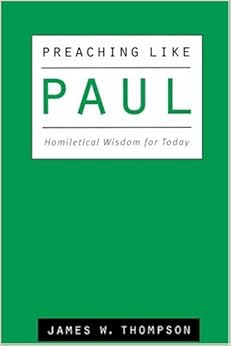
--James W. Thompson, Preaching Like Paul: Homiletical Wisdom for Today, p. 48-49
This line stood out to me perhaps more than all the others:
His proclamation was neither a response to the questions that people were asking nor an attempt to present Christianity as the answer to their own pursuits.
I still remember the first time I heard the idea that faithful and winsome evangelism requires answering the questions people are asking with the truth of God's Word.  I've heard it multiple times, perhaps most recently from Tim Keller:
So the first task of contextualization is to immerse yourself in the questions, hopes, and beliefs of the culture so you can give a biblical, gospel-centered response to its questions.  When Paul began to speak to the philosophers in Athens, he began by saying he had carefully studied their objects of worship (Acts 17:23).  We should do the same.

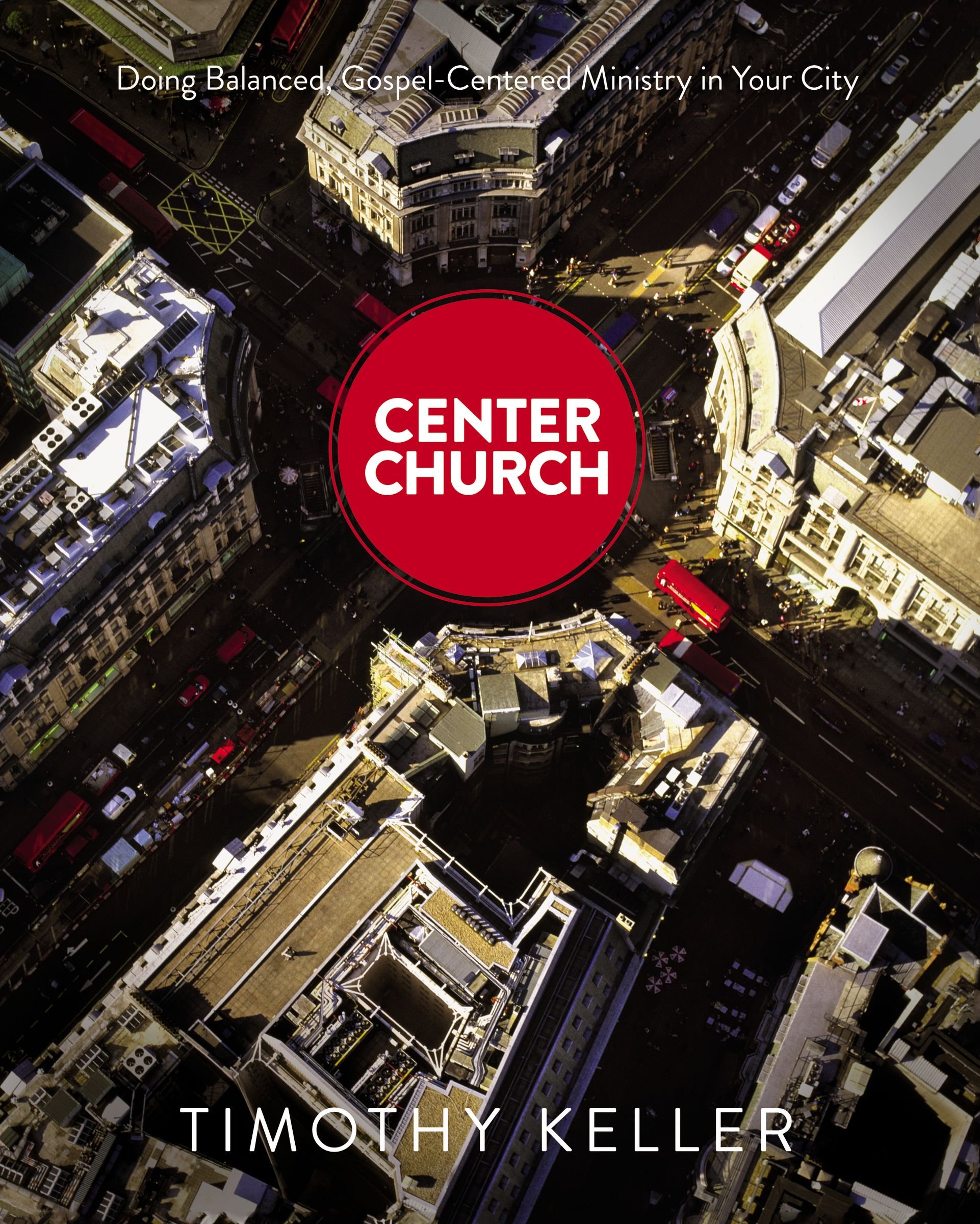
--Tim Keller, Center Church: Doing Balanced, Gospel-Centered Ministry in Your City, p. 121
Interestingly enough, Keller (commenting on 1 Corinthians 1:22-24) also argues that faithful contextualization requires presenting Christianity as the answer to the pursuits of those who are lost:
Notice that while the gospel offended each culture in somewhat different ways, it also drew people to see Christ and his work in different ways.  Greeks who were saved came to see that the cross was the ultimate wisdom--making it possible for God to be both just and the justifier of those who believe.  And Jews who had been saved came to see that the cross was true power.  It meant that our most powerful enemies--sin, guilt, and death itself--have been defeated.

It is striking, then, to see how Paul applies the gospel to confront and complete each society's baseline cultural narrative.  He does this both negatively and positively.  He confronts each culture for its idols, yet he positively highlights their aspirations and ultimate values.  He uses the cross to challenge the intellectual hubris of the Greeks and the works-righteousness of the Jews.  But he also affirms their most basic collective longings, showing that Christ alone is the true wisdom the Greeks have looked for and is the true righteousness that the Jews have sought.  Paul's approach to culture, then, is neither completely confrontational nor totally affirming.   He does not simply rail against Greek pride in intellect and Jewish pride in power; instead he shows them that the ways they are pursuing these good things are ultimately self-defeating.  He reveals the fatal contradictions and underlying idolatry within their cultures and then points them to the resolution that can only be found in Christ.  This is the basic formula for contextualization.

--Tim Keller, Center Church: Doing Balanced, Gospel-Centered Ministry in Your City, p. 111-112
Now, maybe it's just me, but it doesn't sound to me like Thompson and Keller are painting the same picture of Paul's message and method--nor do they sound complementary.  If this is indeed the case, whose portrait more accurately reflects the biblical landscape?

Thursday, September 04, 2014

God's Military Tactics

So what does God think of militarism?  Does God think, with Hal Lindsey, that the moral downfall of America is due to a "crisis of military weakness"?  Does "the Bible" really "support building a powerful military force" as Wayne Grudem says?  Should we consider a strong national defense to be a biblical virtue?

No.
Not at all.
Quite the opposite, in fact.

However, America's excessive militarism is inconceivable apart from "the support offered by several tens of millions of evangelicals."  This is unbelievable.  Most of all, it's unbiblical.

If America, for instance, used the Bible to shape its warfare policy, that policy would look like this.  Enlistment would be by volunteer only (which it is), and the military would not be funded by taxation.  America would not stockpile superior weapons--no tanks, drones, F-22s, and of course no nuclear weapons--and it would make sure its victories were determined by God's miraculous intervention, not by military might.  Rather than outnumbering the enemy, America would deliberately fight outmanned and under-gunned.  Perhaps soldiers would use muskets, or maybe just swords.  There would be no training, no boot camp, no preparation other than fasting, praying, and singing worship songs.  If America really is the "new Israel," God's holy nation as some believe, then it needs to take its cue from God and His inspired manual for military tactics.  But as it stands, many Christians will be content to cut and paste selected verses that align with America's worldview to give the military some religious backing.  Some call this bad hermeneutics; others call it syncretism.  The Israelite prophets called it idolatry.

--Preston Sprinkle, Fight: A Case for Christian Non-Violence, chapter 3
Ouch.  That stings.  But Amen, brother.